



Bhakti Niskama Shanta, Ph.D.
President-Sevait-Ācārya
Śrī Chaitanya Saraswat Math Worldwide: www.scsmathworldwide.com
📲 Stay Updated: Whatsapp
Introduction: Rediscovering the Science of Devotional Expression
Śrīmad-Bhāgavatam (1.5.22):
idaṁ hi puṃsas tapasaḥ śrutasya vā
sviṣṭasya sūktasya ca buddhi-dattayoḇ
avicyuto ’rthaḥ kavibhir nirūpito
yad-uttamaśloka-guṇānuvarṇanam
Translation: Learned circles have positively concluded that the infallible purpose of the advancement of knowledge, namely austerities, study of the Vedas, sacrifice, chanting of hymns and charity, culminates in the transcendental descriptions of the Lord, who is defined in choice poetry.
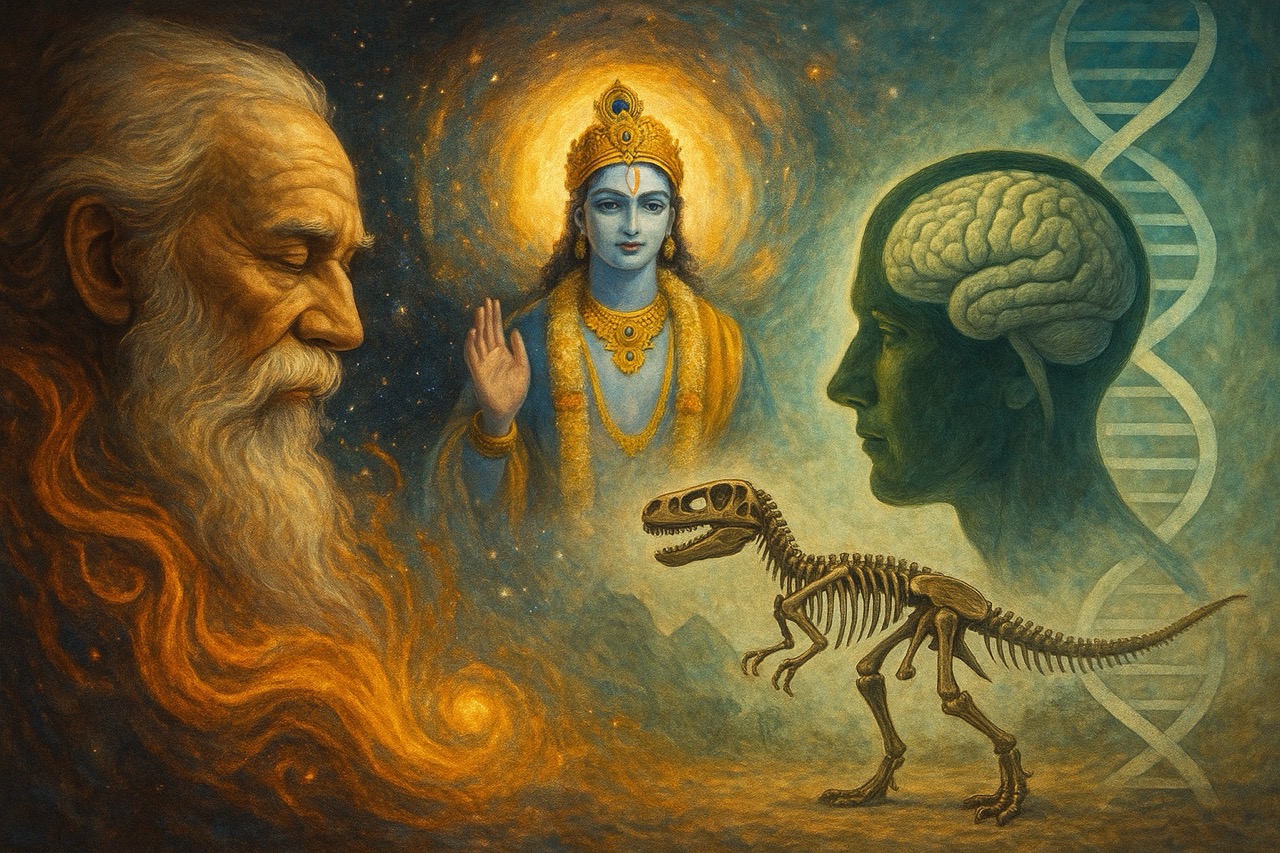
The age of quarrel, Kali-yuga, is marked by extreme disturbances of the body and mind, socio-political unrest, and spiritual confusion. In such a dark age, the most merciful descent of the Supreme Lord is in the form of His Name: nāma avatāra. The process of saṅkīrtan, congregational glorification of the Lord through chanting, speaking, and remembrance, is not merely a ritualistic performance but the full engagement of the entire being in the service of the Supreme. As Śrīla Bhakti Rakṣak Śrīdhar Dev-Goswāmī Mahārāj explains, saṅkīrtan is loud glorification for the satisfaction of Kṛṣṇa, not for the world, not for our own self, not for advertisement. It is an act of surrender and alignment with the will of the Absolute.
In this article, we explore the transformative effect of saṅkīrtan on the body, mind, and soul, grounded in the pure devotional conclusions of Gauḍīya Vaiṣṇava philosophy, and supported by the insight of Śrīla Vyāsadeva in the Bhāgavatam.
Saṅkīrtan and the Body: Sacred Engagement of the Senses
In saṅkīrtan, the physical body becomes an instrument of transcendental service. The voice is employed to chant, the hands to clap or play instruments like karatālas and mṛdaṇgas, the feet to dance in divine ecstasy, the eyes to behold the Lord and His devotees. This sanctified engagement purifies the body of its previous habits born from sense gratification. As Śrīla Bhaktisiddhānta Saraswatī Ṭhākur remarked, we have not come to this world to be carpenters or doctors or engineers. We have come to chant the Name and Glories of Kṛṣṇa. All other activities are secondary and only have value if they support hari-sevā.
Modern scientific studies even report the physiological benefits of devotional chanting: reduced heart rate, lowered blood pressure, increased parasympathetic activity. But these are by-products. The real transformation occurs when one no longer identifies with the body as the self. The body’s natural function is realized in its position as a servant (dāsa) of the Lord.
Thus, saṅkīrtan liberates the body from karma-producing actions and aligns it with seva-dharma — the body becomes a sacred temple, engaged fully in the movement of divine sound.
Saṅkīrtan and the Mind: Transcending the Flickering Dualities
The mind is notoriously restless and pulled by conflicting desires. In the Gītā, Kṛṣṇa compares it to a stormy wind. Yet, saṅkīrtan has the power to arrest and redirect the mind by absorbing it in the remembrance of the Lord. Śrīla Rūpa Gosvāmī defined saṅkīrtan as the foremost of all devotional activities: kīrtanam tu khalu śreyaḥ — because it directly engages the tongue and mind in glorification. As one continues to chant, mental agitations born of lust, anger, greed, and illusion are gradually cleansed (ceto-darpaṇa-mārjanam).
Gauḍīyas do not seek to annihilate the mind but to spiritualize it. In the proper mood, the mind becomes an ally in smaraṇa (remembrance) and meditation on the Lord’s nāma, rūpa, guṇa, līlā. As Śrīla Bhakti Sundar Govinda Dev-Goswāmī Mahārāj often said, do not trust your mind. But always serve with mind surrendered under the guidance of the sādhu. This is possible through saṅkīrtan in the association of pure devotees.
Thus, saṅkīrtan does not merely pacify the mind but transforms it into a cintāmaṇi mirror of divine thought and remembrance, carrying the reflection of Kṛṣṇa Himself. In Gauḍīya kirtan we find:
śrī-gauḍa-maṇḍala-bhūmi, jebā jāne cintāmaṇi,
tāra haya vraja-bhūme vāsa
Translation:
One who realizes that Śrī Gauḍa-maṇḍala-bhūmi is composed of cintāmaṇi, the divine wish-fulfilling substance of the spiritual world, becomes inwardly qualified to reside in Vraja-bhūmi, the transcendental realm of Śrī Kṛṣṇa’s eternal pastimes.
The material mind, when purified by śravaṇa and smaraṇa of Gauḍa-maṇḍala-līlā, gradually transforms into citta — a spiritualized consciousness. Śrī Gauḍa-maṇḍala is not a mundane location; it is non-different from Vraja, for in Gauḍa, Śrī Gaurāṅga performed His līlā to distribute the highest gift—rādhā-bhāva-yuta kṛṣṇa-prema, which even the residents of Vaikuṇṭha, Ayodhyā and Dvārakā long to taste. When a sādhaka deeply meditates on the dust, rivers, villages, and pastimes of Śrī Gaurāṅga and His associates in Gauḍa-maṇḍala—especially under the shelter of a realized Gauḍīya Guru—his mind becomes sanctified and filled with divine longing. This purifies the mirror of the heart (ceto-darpaṇa-mārjanam) and prepares the sādhaka for internal service in aprākṛta Vraja-līlā.
Thus, this verse reveals that meditation on Gauḍa-dhāma is not separate from Vraja-dhāma; rather, it is the golden gateway to enter Kṛṣṇa’s divine land. Only by recognizing the divine potency (cintāmaṇi-svarūpa) of Gauḍa-dhāma can one truly enter the heart of vraja-rasa. The transformation of the mind through Gauḍa-dhāma–smaraṇa is, therefore, the beginning of spiritual identity-realization (svarūpa-siddhi).
Saṅkīrtan and the Soul: Awakening Our Eternal Identity
The soul (jīva) is eternally related to Kṛṣṇa in one of five rasas (śānta, dāsya, sakhya, vātsalya, mādhurya). But covered by ignorance (avidyā), we wander in forgetfulness. The only force powerful enough to break this spell is the Name of the Lord chanted in saṅkīrtan. Kṛṣṇa-nāma is not different from Kṛṣṇa. He dances on the tongue of a surrendered soul. This nāma-saṅkīrtan is the highest dharma of the soul, as explained by Śrī Caitanya Mahāprabhu in His Śikṣāṣṭakam.
Śrīla Śrīdhar Mahārāj reveals that saṅkīrtan is the highest form of divine service because it implies heart-giving. Saṅkīrtan awakens the soul to its real identity as an eternal servant of Rādhā-Govinda, and reinstates it in the plane of bhāva and prema, beyond liberation.
Gauḍīya Siddhānta: Saṅkīrtan as Total Engagement
In the Gauḍīya conception, saṅkīrtan is not confined to musical expression. It is total engagement — of body, mind, wealth, knowledge, followers, family, and all resources — in the loving service of Śrī Hari under the guidance of a bona fide Guru. As Śrīla Bhakti Siddhānta Saraswatī Ṭhākur emphasized, saṅkīrtan is the full offering of one’s existence in glorification of the Supreme. He sent his disciples across the world for this purpose. Even writing books, distributing literature, cooking prasādam, or sweeping the temple floor — when done in the mood of glorifying the Lord — is saṅkīrtan. It is an expression of kīrtanīyaḥ sadā hariḥ — always singing His glories through action, speech, and consciousness.
Śrīla Śrīdhar Mahārāj has further described how saṅkīrtan of the highest kind, Gaura-saṅkīrtan-rāsa is found in the intimate circle of Mahāprabhu’s devotees, where the Lord Himself becomes the relisher of His own glory.
Conclusion: The Heart of All Vedic Endeavor
As stated in Bhāgavatam 1.5.22, the purpose of all austerity, scholarship, poetic genius, sacrifice, and intelligence is fulfilled when it culminates in the guṇānuvarṇanam of the Supreme Lord. This is the essence of saṅkīrtan: to glorify the Supreme Personality of Godhead, Śrī Kṛṣṇa, in the association of devotees, offering one’s whole being in divine loving service.
Let us remember: Saṅkīrtan is not a technique, but a posture of surrender. It is not for health or prestige, but to please Śrī Hari. And in that attempt, the body is purified, the mind harmonized, and the soul awakened to its eternal destiny. In this way, saṅkīrtan-yajñaḥ — the divine sacrifice of the age — becomes the golden bridge connecting the soul to the transcendental world of prema, where Rādhā-Govinda eternally perform Their divine līlā.
param vijayate śrī-kṛṣṇa-saṅkīrtanam: All phases of the self of which we may conceive are fully satisfied and purified, and at last conquered by the all-auspicious influence of congregational chanting of the Holy Name of Kṛṣṇa.

Discover more from The Rūpa–Saraswatī Current
Subscribe to get the latest posts sent to your email.